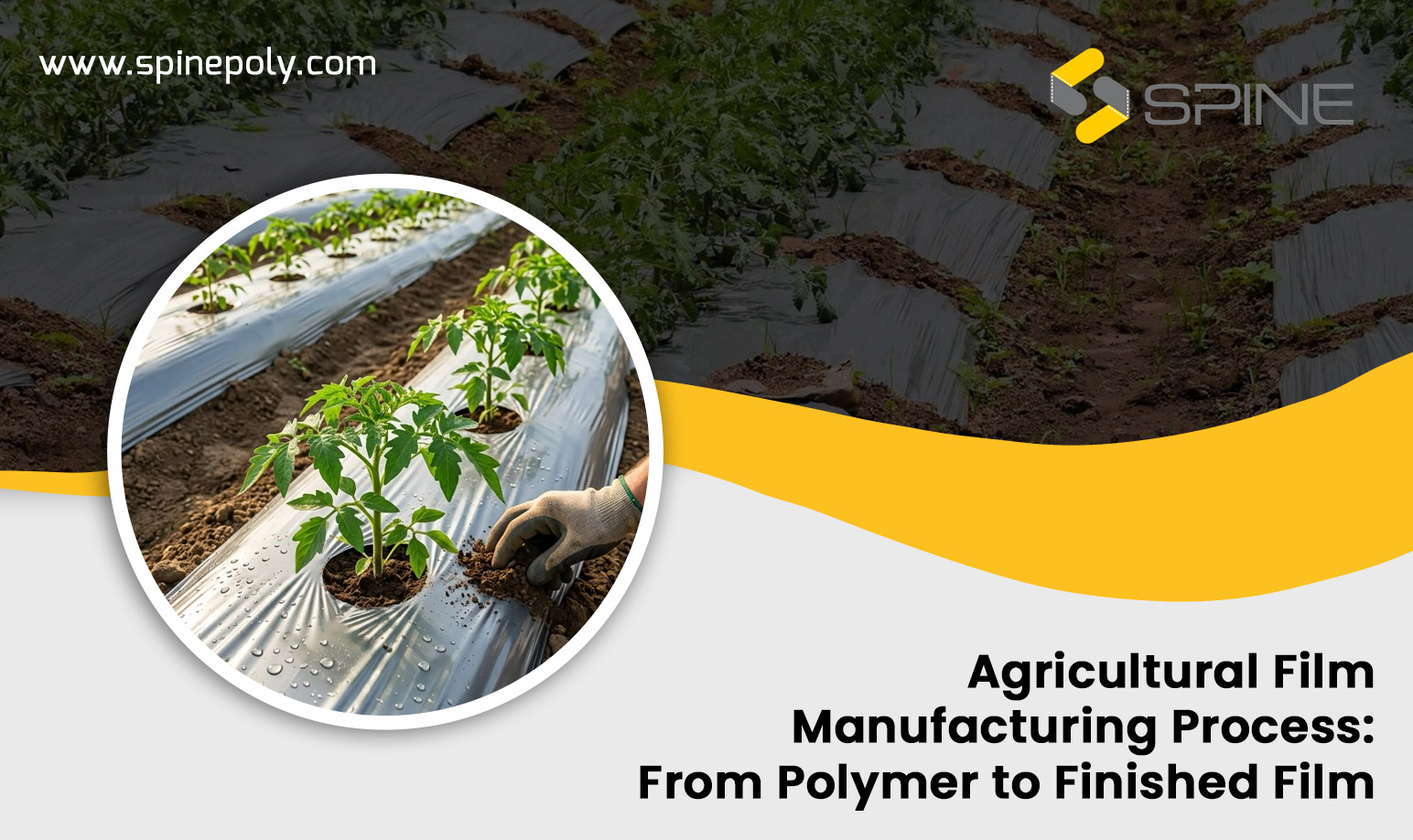
Agricultural Film Manufacturing Process: From Polymer to Finished Film

Agricultural films, mulch films, greenhouse covers, silage wraps, and crop protection sheets look simple once they’re rolled out over a field. But getting from raw polymer to a functional roll of farm ready film involves a precise, closely controlled manufacturing process. At Spine Poly Tech, understanding this process isn’t just technical knowledge; it’s what allows us to engineer films that actually perform under real agricultural conditions: sun exposure, soil contact, temperature swings, and mechanical stress from wind and handling.

Here’s a look at how agricultural film is actually made, from raw resin to finished roll.

Step 1: Selecting the Right Polymer

Everything starts with resin selection. Most agricultural films are made primarily from polyethylene, typically linear low density polyethylene (LLDPE), sometimes blended with low density polyethylene (LDPE) or high density polyethylene (HDPE) depending on the application. LLDPE is favored because of its strength, flexibility, and puncture resistance, which matter enormously for films that get stretched over soil beds or exposed to wind and equipment contact.

Additives are blended in at this stage too, depending on the film’s intended function:

  • UV stabilizers to slow degradation from prolonged sun exposure
  • Anti fog or light diffusion agents for greenhouse films
  • Black or colored pigments for mulch films used for weed suppression and soil temperature control
  • Biodegradable additives, in films designed to break down after a growing season

The polymer blend is what ultimately determines how the film performs in the field; its durability, light transmission, and how it handles temperature extremes.

Step 2: Extrusion; Turning Resin Into Film

The polymer, typically supplied as small plastic pellets, is fed into an extruder, where it’s heated and mechanically worked until it melts into a uniform, flowable mass. Most agricultural film is produced using a process called blown film extrusion.

In blown film extrusion, the molten polymer is forced through a ring shaped (annular) die, forming a continuous tube of molten plastic. Air is then blown up through the center of this tube, inflating it into a bubble several times the diameter of the die. This inflation step is critical; it stretches and thins the film to its target thickness while also aligning the polymer’s molecular structure, which improves strength in multiple directions.

For films that need specific performance properties like enhanced barrier protection, added strength, or UV control layered separately from the base film manufacturers often use co extrusion, where multiple polymer layers with different properties are extruded simultaneously through the same die, fusing into a single multi layer film. Advanced agricultural extrusion lines today can produce films with up to seven distinct layers, allowing manufacturers to balance strength, material efficiency, and functional performance within one film structure.

Step 3: Cooling and Bubble Formation

As the inflated bubble rises above the die, it passes through a cooling zone, usually using an external air ring and, for high performance lines, additional internal cooling. This cooling solidifies the polymer, locking in the film’s thickness and structural properties. The point where the molten film fully solidifies is known as the frost line, and its height is carefully controlled, since it directly affects film clarity, strength, and thickness consistency.

Step 4: Collapsing and Flattening the Film

Once cooled, the bubble is drawn upward by a pair of nip rollers positioned several meters above the die. These rollers gradually collapse the tubular bubble into a flat, double layered film web. The speed of this draw off process, relative to the extrusion rate, determines the final film gauge (thickness) a critical specification for agricultural films, where thickness directly affects durability, UV resistance duration, and cost per acre covered.

Step 5: Slitting and Winding

Depending on the intended use, the flattened film tube may be slit along one or both edges to produce single or double sheets, rather than a continuous tube. This is common for mulch films, which are typically used as flat sheets rather than tubing.

The finished film is then wound onto large rolls using precision winding equipment that maintains consistent tension across the roll’s width. Uneven winding tension can cause wrinkling, stretching, or inconsistent unrolling in the field; a seemingly minor manufacturing detail that has real consequences for farmers laying film over long rows.

Step 6: Quality Control Testing

Before agricultural film leaves the facility, it typically undergoes testing for:

  • Tensile strength and elongation — to confirm the film can withstand stretching during field application without tearing
  • Thickness consistency — measured across the width and length of the roll
  • UV resistance duration — particularly important for films expected to last a full growing season
  • Puncture resistance — simulating exposure to soil debris, equipment, and handling stress

Films that don’t meet specification are flagged before they reach packaging, since failures in the field; torn mulch film or a collapsed greenhouse cover mid season are far more costly to a farmer than a delayed shipment.

Step 7: Packaging and Distribution

Finished rolls are cut to standard or custom widths and lengths based on customer requirements, then packaged for shipment. For agricultural customers, roll width and length matter as much as the film itself mismatched roll dimensions can mean wasted material or incompatibility with field application equipment.

Why the Process Matters to Farmers and Distributors

Every stage of this process polymer selection, extrusion control, cooling precision, and winding tension directly affects how the film performs once it’s stretched across a field. A film manufactured with inconsistent thickness or poor UV stabilization might look identical to a properly engineered one on the roll, but it will fail early, degrade unevenly, or tear during application.

At Spine Poly Tech, our agricultural film production is built around this understanding: the manufacturing process isn’t just about producing plastic sheeting; it’s about engineering a product that has to survive weather, soil, and mechanical stress for an entire growing season.

Looking for agricultural film engineered for your specific crop, climate, or application method? Get in touch with Spine Poly Tech to discuss film specifications suited to your operation.
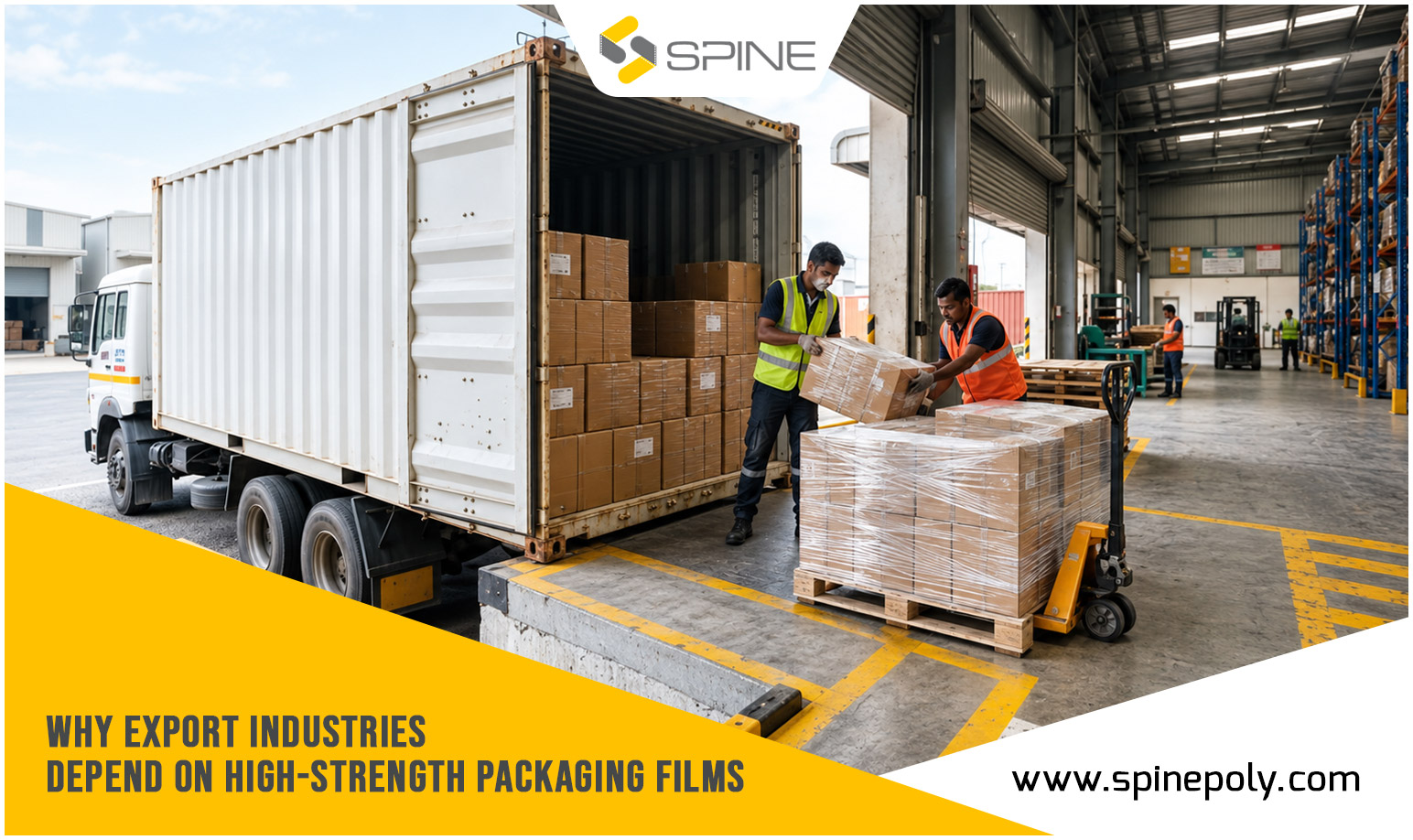
Why Export Industries Depend on High Strength Packaging Films

When a product leaves a factory floor bound for another country, it stops being just a product; it becomes cargo. It gets stacked, shaken, compressed, exposed to temperature swings, humidity, and handling that no domestic shipment ever experiences. For export driven businesses, packaging isn’t a finishing touch; it’s a functional part of the supply chain. At Spine Poly Tech, this is the reality we design films around every day, and it’s why high strength packaging films have become non-negotiable for exporters rather than a premium upgrade.

Export Shipping Is a Different Kind of Stress Test

Domestic shipping usually involves a single truck route and a short handling chain. Export shipping is longer, more layered, and far less predictable. A single container shipment might involve:

  • Multiple loading and unloading cycles across trucks, ports, and warehouses
  • Weeks at sea, exposed to humidity, salt air, and temperature fluctuation
  • Stacking pressure from other cargo, sometimes for extended periods
  • Customs handling, where packages are opened, inspected, and re sealed
  • Long final mile delivery once the shipment reaches its destination country

Every one of these stages adds mechanical stress, moisture exposure, or handling risk. Standard grade films, designed for shorter and simpler supply chains, often aren’t built to hold up through all of it.

What “High Strength” Actually Means in Film Terms

High strength packaging films aren’t just thicker versions of regular film. Strength in packaging film comes from a combination of engineered properties:

Tensile strength — the film’s resistance to stretching or tearing under load, critical when pallets are wrapped tightly or when packages are dragged, lifted, or dropped during transit.

Puncture resistance — protection against sharp edges, corners, or rough handling equipment common in freight and port operations.

Seal integrity — strong, consistent seals that don’t fail under pressure changes, vibration, or prolonged storage, which matters enormously for products shipped in bulk or stacked containers.

Barrier properties — resistance to moisture vapor and oxygen transmission, which protects against corrosion, spoilage, or contamination during long transit times, especially by sea freight.

Multi layer construction — combining different resin layers (such as polyethylene, polyamide, or EVOH) to balance strength, flexibility, and barrier performance in a single film structure.

These properties work together, which is why export grade film is typically engineered rather than picked off a generic shelf.

Industries Where This Matters Most

Agriculture and Food Exports: Products like grains, spices, and processed foods travel long distances, often by sea, where humidity and temperature control are limited. High strength, high barrier films prevent moisture ingress and pest contamination that can spoil an entire shipment.

Pharmaceuticals and Medical Supplies: Export pharmaceutical packaging must maintain product integrity across variable climates and extended transit times, often while meeting destination country regulatory requirements. Film failure here isn’t just a cost issue; it’s a safety and compliance issue.

Textiles and Apparel: Bulk textile exports rely on strong, tear resistant wrapping to prevent contamination, moisture damage, and physical wear during handling, particularly when goods are compressed for shipping efficiency.

Industrial Components and Machinery Parts: Heavy or irregularly shaped items need films with high puncture and tensile strength to prevent tearing during loading, stacking, and cross docking.

Chemicals and Agrochemicals: These often require films with specific barrier and containment properties to prevent leakage, contamination, or reaction with moisture and air during transit, a strict regulatory and safety requirement in most export markets.

The Cost of Getting It Wrong

Packaging failure during export doesn’t just mean a damaged product; it means rejected shipments, customs delays, spoiled inventory, damaged client relationships, and in regulated industries, potential compliance violations. Many exporters only upgrade to high strength film after experiencing one of these failures firsthand, which is a costly way to learn the lesson.

By contrast, investing in the right film specification upfront reduces:

  • Product loss and spoilage during transit
  • Repackaging and rework at ports or customs checkpoints
  • Insurance claims tied to damaged goods
  • Reputational risk with international buyers who expect consistent quality
International Standards Exporters Should Be Aware Of

Export packaging often needs to align with international handling and testing frameworks, such as ISTA (International Safe Transit Association) testing protocols for transit durability, and ISPM 15 requirements for wood packaging materials used alongside film wrapping. While these standards primarily govern creating and pallet materials, the film wrapping and sealing system around the product plays a direct role in whether a shipment survives the handling and testing conditions these frameworks simulate.

Choosing the Right Film for Your Export Line

Not every export product needs the same film specification. The right choice depends on:

  1. Transit duration and mode — sea freight demands different barrier properties than air freight
  2. Product sensitivity — perishables and pharmaceuticals need tighter moisture and oxygen control than industrial goods
  3. Handling conditions — fragile or heavy items need higher puncture and tensile strength
  4. Destination market regulations — some countries have specific packaging compliance requirements for imports
How Spine Poly Tech Supports Exporters

We work with export focused manufacturers to engineer films matched to their specific shipping routes, product sensitivity, and destination requirements, rather than defaulting to a one size fits all solution. Whether that means a multi layer barrier film for food exports or a high tensile industrial wrap for machinery components, the goal is the same: packaging that survives the full journey, not just the first leg of it.

If your export shipments are facing damage, spoilage, or compliance issues, our team can help identify the right high strength film specification for your product and route. Get in touch with Spine Poly Tech to discuss your export packaging needs.

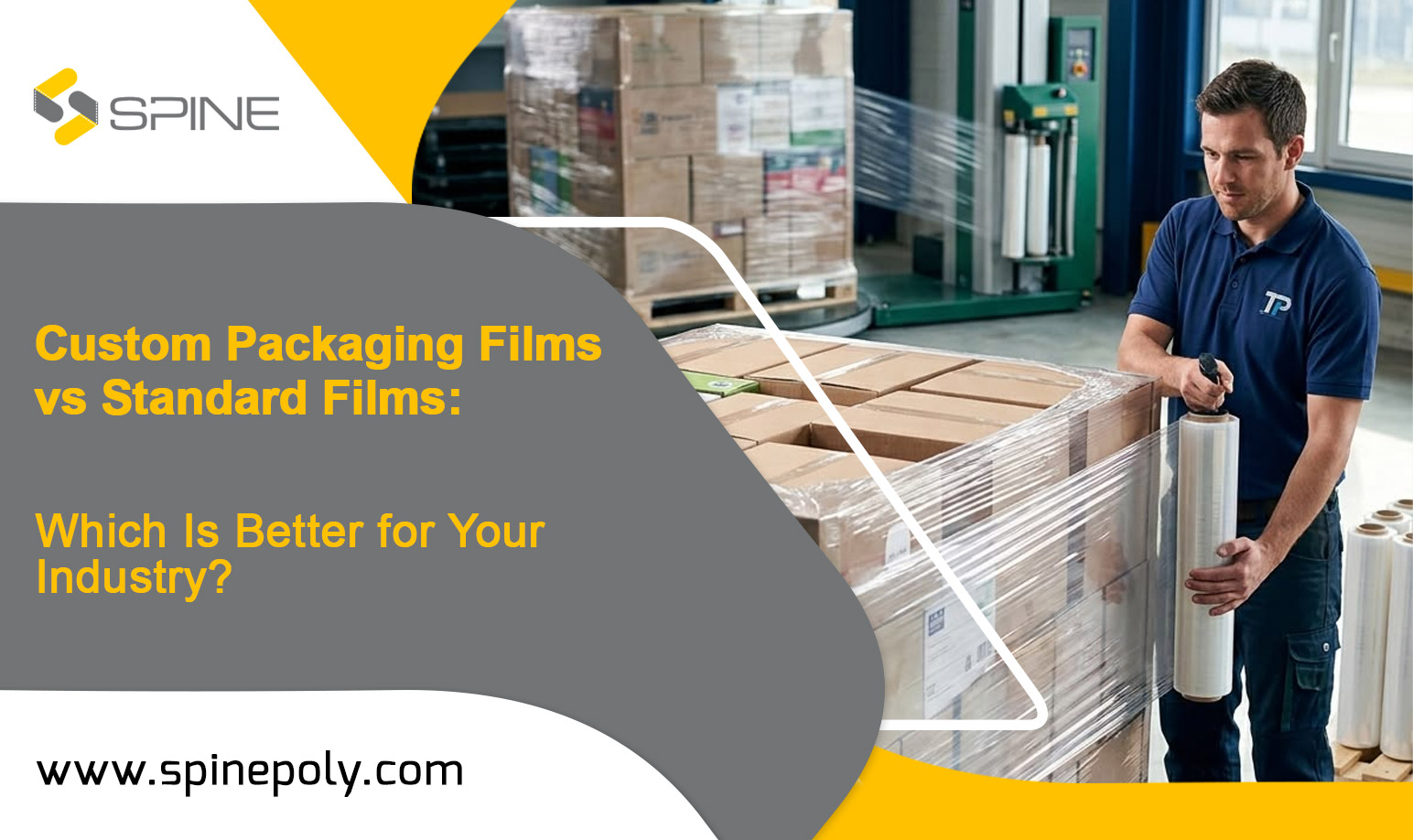
Custom Packaging Films vs Standard Films: Which Is Better for Your Industry?

Packaging film is one of those decisions businesses often make quickly and revisit slowly usually only after a shipment gets damaged, a product loses shelf life early, or a customer complains about how a package looks. At Spine Poly Tech, we work with manufacturers across food, pharmaceuticals, textiles, industrial goods, and consumer products, and the question we hear most often is simple: should you go with standard packaging film, or invest in a custom solution?

The honest answer is that neither option is universally “better.” The right choice depends on your product, your industry’s regulatory demands, your budget, and how much your packaging needs to do beyond simply holding a product together. Here’s a practical breakdown to help you decide.

What Standard Films Actually Offer

Standard packaging films are pre manufactured in common thicknesses, widths, and material grades typically polyethylene (PE), polypropylene (PP), or BOPP. They’re built for general purpose use and produced in bulk, which is exactly why they remain popular.

Strengths of standard films:

  • Lower cost per unit — because they’re mass produced without custom tooling or formulation changes
  • Fast availability — no design or development lead time
  • Proven performance — widely tested for basic sealing, moisture resistance, and general durability
  • Simplicity — ideal when packaging is purely functional, not a branding tool

Standard films work well for businesses with straightforward packaging needs: dry goods, hardware components, basic retail wraps, or internal industrial packaging where appearance and specialized barrier properties aren’t priorities.

Where Standard Films Fall Short

The limitations show up when your product has specific requirements that generic film wasn’t engineered to handle. Common gaps include:

  • Inadequate barrier protection against oxygen, moisture, or UV light for sensitive products
  • No branding surface plain films don’t support strong shelf presence
  • One size fits all thickness that either wastes material or under protects the product
  • Limited compatibility with automated packaging lines requiring precise film specifications
  • For industries like food processing, pharmaceuticals, or electronics, these gaps aren’t cosmetic; they directly affect product safety, compliance, and shelf life.
What Custom Films Bring to the Table

Custom packaging films are engineered around your product’s actual requirements; its sensitivity to light or moisture, its weight, its shelf life target, its regulatory environment, and its branding needs. This can involve adjusting film composition (multi layer laminates, specific resin blends), thickness, opacity, printability, and barrier coatings.

Key advantages:

1. Product specific protection — Films can be engineered with tailored oxygen transmission rates (OTR) and moisture vapor transmission rates (MVTR) to match exactly what your product needs, rather than over or under protecting it.

2. Brand differentiation — Custom printing, finishes, and structural design turn packaging into a marketing asset, which matters enormously in retail and consumer goods where shelf appeal drives purchase decisions.

3. Regulatory compliance — Pharmaceutical and food grade packaging often must meet specific certifications (such as FDA or food contact safety standards). Custom films can be formulated to meet these requirements precisely, where standard films may not.

4. Machine compatibility — High speed packaging lines often need films with exact tensile strength, thickness tolerance, and sealing characteristics. Custom films can be matched to your specific machinery to reduce downtime and material waste.

5. Long term cost efficiency — While the upfront cost is higher, reduced product spoilage, fewer returns, and less material waste from over engineering standard film often make custom solutions more economical over time.

Industry-by-Industry: Which Makes More Sense?

Food & Beverage: Custom films are usually the better investment. Shelf life, freshness retention, and food safety compliance depend heavily on barrier properties that standard films rarely provide out of the box.

Pharmaceuticals: Custom is close to mandatory. Moisture and light sensitivity, tamper evidence, and regulatory documentation typically require engineered film solutions.

Textiles & Apparel: Most basic protective wrapping can be done with standard films, but brands looking to invest in retail presentation can use custom printed films for their higher end product lines.

Industrial & Hardware: Standard films are often sufficient, especially for internal packaging or non-perishable parts where the requirements for protection are minimal.

Consumer Electronics: A mixed approach works well with custom films for anti static or moisture sensitive components, standard films for bulk internal packaging.

E-commerce & Retail: Custom films increasingly make sense as brands compete on unboxing experience and product protection during shipping, where damage and returns carry real cost.

Making the Decision

A useful way to approach this is to ask three questions:

  1. Does my product have specific protection needs (moisture, oxygen, light, temperature) that generic film can’t reliably meet?
  2. Does packaging play a role in my brand or customer experience, or is it purely functional?
  3. Do I have the volume to justify custom tooling and development costs, or does my current scale make standard film more practical?

If your answers point toward specialized protection, brand visibility, or regulatory compliance, custom film is worth the investment. If your packaging is functional, low risk, and cost sensitive, standard film remains a smart, efficient choice.

Our Approach at Spine Poly Tech

We don’t push one solution over another, we start by understanding your product, your industry’s compliance requirements, and your production line before recommending a film structure. Sometimes that means a standard film grade that already meets your needs cost effectively. Other times, it means developing a custom multi layer film engineered specifically for your product’s barrier, strength, and branding requirements.

The right packaging film isn’t the cheapest one or the most advanced one; it’s the one that matches what your product and industry actually demand.