12 Oct 2026
26 Oct 2026
Industrial Packaging Trends That Will Define the Next Decade
Industrial packaging is entering a period where performance will matter as much as protection. For years, the basic objective was clear: keep products safe during storage and transport. In the decade ahead, industrial packaging will also be expected to reduce material use, work reliably with automation, support traceability, and meet increasingly demanding sustainability goals.
For manufacturers, exporters, warehouse operators, and converters, packaging will become a more strategic part of operational planning. The right film will not simply wrap a load; it will help improve productivity, reduce losses, and make supply chains more resilient.
Here are the key industrial packaging trends likely to shape the years ahead.
1. Packaging Will Be Designed Around Total Cost, Not Purchase Price
The least expensive packaging material is not always the most economical choice. A film that tears during wrapping, causes downtime on a packing line, or fails to protect goods in transit can create costs far beyond its purchase price.
Industrial buyers are increasingly looking at the full value of packaging, including:
- Material consumption per pack or pallet
- Line speed and ease of processing
- Product damage during handling and shipping
- Storage efficiency
- Returns, rework, and replacement costs
This will increase demand for packaging films that provide consistent performance rather than simply a low per kilogram price.
At Spine Poly Tech, industrial and export packaging films are developed for practical logistics requirements, including stretchability, load stability, puncture resistance, and tear resistance.
2. Lightweight Films Will Need to Deliver Heavy Duty Performance
Reducing packaging weight will remain an important objective for industrial businesses. Lighter packaging can reduce material usage and make loads easier to handle. However, lightweighting cannot come at the expense of product protection.
The focus will therefore shift toward films that offer strong mechanical performance at an optimised thickness. Manufacturers will seek solutions that can resist punctures, hold loads securely, and withstand transport conditions while using material efficiently.
Multilayer film structures will have an important role here. Different layers can be designed to contribute specific properties, such as strength, sealing performance, clarity, or barrier protection. Spine Poly Tech offers multilayer PE structures with options for barrier and strength requirements, helping customers align film design with the demands of their application.
3. Automation Compatibility Will Become a Basic Requirement
Warehouses and manufacturing facilities are adopting faster wrapping lines, automated sealing equipment, and material handling systems. Packaging films must keep pace.
In the next decade, industrial packaging will be judged not only by how it protects a product, but also by how consistently it performs on machinery. Films that unwind smoothly, maintain reliable gauge consistency, seal effectively, and resist breakage can help prevent avoidable line stoppages.
For businesses operating at scale, even a short interruption in packaging activity can affect output and dispatch schedules. As a result, machine friendly packaging materials will become essential rather than optional.
Spine Poly Tech’s industrial stretch wraps and shrink films are designed for use with automated wrapping systems, supporting efficient packing operations.
4. Packaging Will Become More Application Specific
Standard packaging has its place, but many industrial products require more targeted protection. Machinery components, construction materials, chemicals, electronics, agricultural products, and export goods all face different risks.
Packaging specifications will increasingly be based on real handling conditions, including exposure to dust, moisture, sunlight, abrasion, puncture hazards, and long distance transportation.
This will lead to greater demand for customised films with features such as:
- UV resistance for outdoor storage
- Antistatic properties for sensitive components
- Slip and anti block additives for improved processing
- Clear or coloured film options
- Specific widths, gauges, and formats for individual pack designs
Spine Poly Tech provides customisable monolayer and multilayer polyethylene films, helping customers choose structures based on their machinery, product type, and performance goals.
5. Recyclability Will Influence Film Design
Sustainability will continue to affect purchasing decisions across the packaging sector. Industrial users are under pressure to reduce waste, improve material recovery, and use resources more efficiently.
One important direction will be the increased use of polyethylene based mono material solutions where they are technically suitable. Monolayer films can offer a simpler material structure and may support easier recycling routes compared with complex combinations of dissimilar materials.
That said, sustainability must be balanced with function. A film that uses less material but fails during transit can cause more waste through damaged goods and replacement shipments. The future belongs to packaging that combines material efficiency with reliable product protection.
6. Packaging Will Support Better Traceability
Industrial supply chains are becoming more connected. Packaging will increasingly work alongside digital systems that identify, track, and manage goods through production, warehousing, dispatch, and delivery.
QR codes, batch details, barcode labels, and RFID enabled systems can improve stock visibility and reduce manual errors. While these technologies are not part of every film itself, packaging must be designed to accommodate labels, printing, and identification requirements effectively.
Films with good surface properties and printability can help businesses communicate handling instructions, product details, branding, and traceability information clearly.
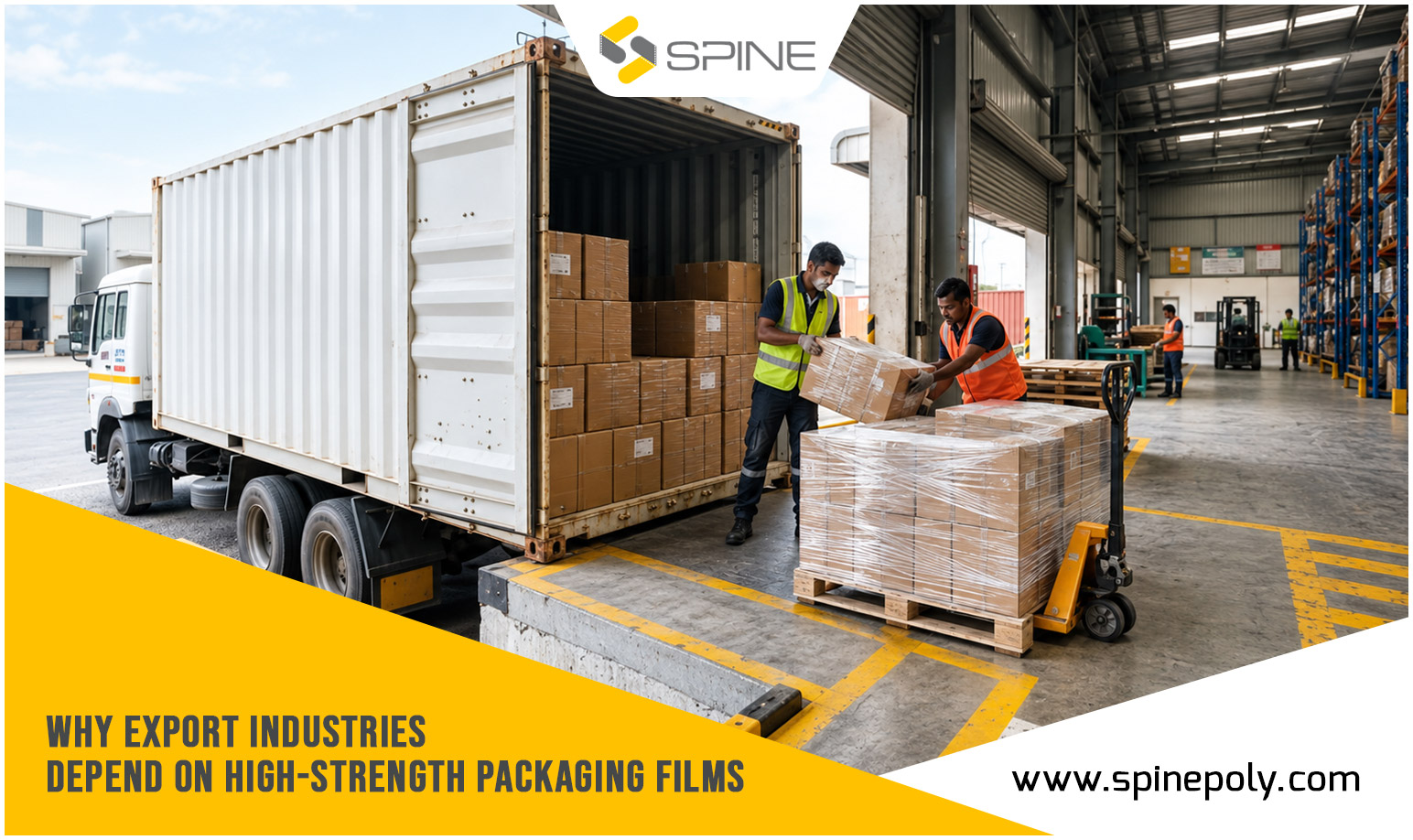
7. Export Packaging Will Demand Greater Resilience
Global logistics exposes goods to longer transit times, variable weather, multiple handling points, and demanding storage conditions. Export packaging must perform consistently across this journey.
Heavy duty shrink films, pallet covers, stretch wraps, and multilayer laminates will continue to be important for protecting industrial loads. Packaging that maintains load stability and provides resistance to moisture, dust, and rough handling can help businesses reduce transit related losses.
Spine Poly Tech offers heavy duty shrink films, stretch wraps, and multilayer laminates for industrial and export applications, with weather resistant and recyclable options available for appropriate requirements.
Preparing for What Comes Next
The next decade of industrial packaging will be defined by smarter material choices, reliable automation performance, tailored protection, and responsible resource use. Businesses that treat packaging as a supply chain asset not just a consumable will be better positioned to control costs and protect product value.
At Spine Poly Tech, we support evolving industrial packaging needs with polyethylene film solutions designed for strength, consistency, and real world performance. From stretch wraps and shrink films to customised multilayer structures, our focus is on helping businesses pack with greater confidence.
Recent Posts