10 Sep 2026
17 Sep 2026
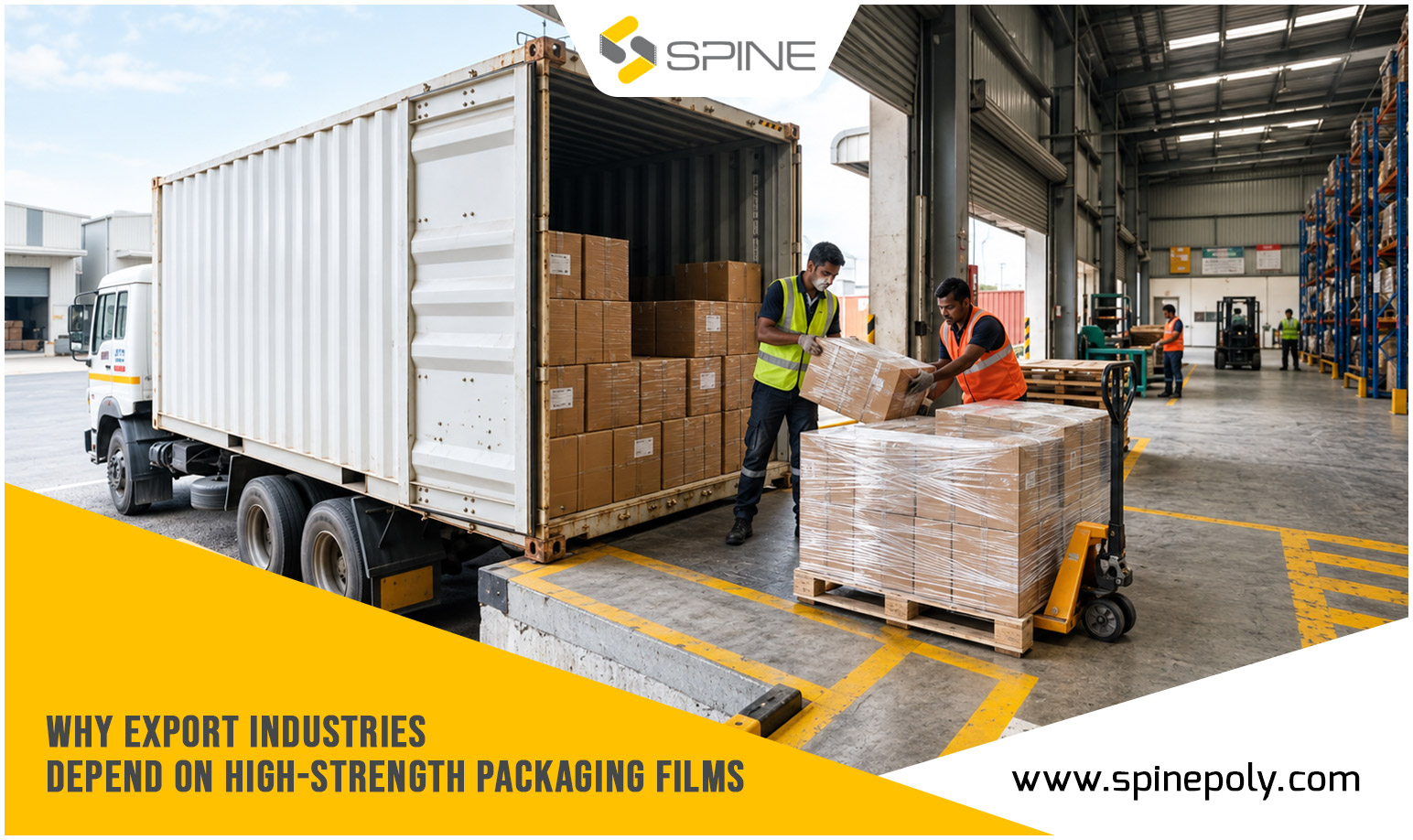
Why Export Industries Depend on High Strength Packaging Films
When a product leaves a factory floor bound for another country, it stops being just a product; it becomes cargo. It gets stacked, shaken, compressed, exposed to temperature swings, humidity, and handling that no domestic shipment ever experiences. For export driven businesses, packaging isn’t a finishing touch; it’s a functional part of the supply chain. At Spine Poly Tech, this is the reality we design films around every day, and it’s why high strength packaging films have become non-negotiable for exporters rather than a premium upgrade.
Export Shipping Is a Different Kind of Stress Test
Domestic shipping usually involves a single truck route and a short handling chain. Export shipping is longer, more layered, and far less predictable. A single container shipment might involve:
- Multiple loading and unloading cycles across trucks, ports, and warehouses
- Weeks at sea, exposed to humidity, salt air, and temperature fluctuation
- Stacking pressure from other cargo, sometimes for extended periods
- Customs handling, where packages are opened, inspected, and re sealed
- Long final mile delivery once the shipment reaches its destination country
Every one of these stages adds mechanical stress, moisture exposure, or handling risk. Standard grade films, designed for shorter and simpler supply chains, often aren’t built to hold up through all of it.
What “High Strength” Actually Means in Film Terms
High strength packaging films aren’t just thicker versions of regular film. Strength in packaging film comes from a combination of engineered properties:
Tensile strength — the film’s resistance to stretching or tearing under load, critical when pallets are wrapped tightly or when packages are dragged, lifted, or dropped during transit.
Puncture resistance — protection against sharp edges, corners, or rough handling equipment common in freight and port operations.
Seal integrity — strong, consistent seals that don’t fail under pressure changes, vibration, or prolonged storage, which matters enormously for products shipped in bulk or stacked containers.
Barrier properties — resistance to moisture vapor and oxygen transmission, which protects against corrosion, spoilage, or contamination during long transit times, especially by sea freight.
Multi layer construction — combining different resin layers (such as polyethylene, polyamide, or EVOH) to balance strength, flexibility, and barrier performance in a single film structure.
These properties work together, which is why export grade film is typically engineered rather than picked off a generic shelf.
Industries Where This Matters Most
Agriculture and Food Exports: Products like grains, spices, and processed foods travel long distances, often by sea, where humidity and temperature control are limited. High strength, high barrier films prevent moisture ingress and pest contamination that can spoil an entire shipment.
Pharmaceuticals and Medical Supplies: Export pharmaceutical packaging must maintain product integrity across variable climates and extended transit times, often while meeting destination country regulatory requirements. Film failure here isn’t just a cost issue; it’s a safety and compliance issue.
Textiles and Apparel: Bulk textile exports rely on strong, tear resistant wrapping to prevent contamination, moisture damage, and physical wear during handling, particularly when goods are compressed for shipping efficiency.
Industrial Components and Machinery Parts: Heavy or irregularly shaped items need films with high puncture and tensile strength to prevent tearing during loading, stacking, and cross docking.
Chemicals and Agrochemicals: These often require films with specific barrier and containment properties to prevent leakage, contamination, or reaction with moisture and air during transit, a strict regulatory and safety requirement in most export markets.
The Cost of Getting It Wrong
Packaging failure during export doesn’t just mean a damaged product; it means rejected shipments, customs delays, spoiled inventory, damaged client relationships, and in regulated industries, potential compliance violations. Many exporters only upgrade to high strength film after experiencing one of these failures firsthand, which is a costly way to learn the lesson.
By contrast, investing in the right film specification upfront reduces:
- Product loss and spoilage during transit
- Repackaging and rework at ports or customs checkpoints
- Insurance claims tied to damaged goods
- Reputational risk with international buyers who expect consistent quality
International Standards Exporters Should Be Aware Of
Export packaging often needs to align with international handling and testing frameworks, such as ISTA (International Safe Transit Association) testing protocols for transit durability, and ISPM 15 requirements for wood packaging materials used alongside film wrapping. While these standards primarily govern creating and pallet materials, the film wrapping and sealing system around the product plays a direct role in whether a shipment survives the handling and testing conditions these frameworks simulate.
Choosing the Right Film for Your Export Line
Not every export product needs the same film specification. The right choice depends on:
- Transit duration and mode — sea freight demands different barrier properties than air freight
- Product sensitivity — perishables and pharmaceuticals need tighter moisture and oxygen control than industrial goods
- Handling conditions — fragile or heavy items need higher puncture and tensile strength
- Destination market regulations — some countries have specific packaging compliance requirements for imports
How Spine Poly Tech Supports Exporters
We work with export focused manufacturers to engineer films matched to their specific shipping routes, product sensitivity, and destination requirements, rather than defaulting to a one size fits all solution. Whether that means a multi layer barrier film for food exports or a high tensile industrial wrap for machinery components, the goal is the same: packaging that survives the full journey, not just the first leg of it.
If your export shipments are facing damage, spoilage, or compliance issues, our team can help identify the right high strength film specification for your product and route. Get in touch with Spine Poly Tech to discuss your export packaging needs.
Recent Posts