12 Oct 2026
24 Sep 2026
Agricultural Film Manufacturing Process: From Polymer to Finished Film
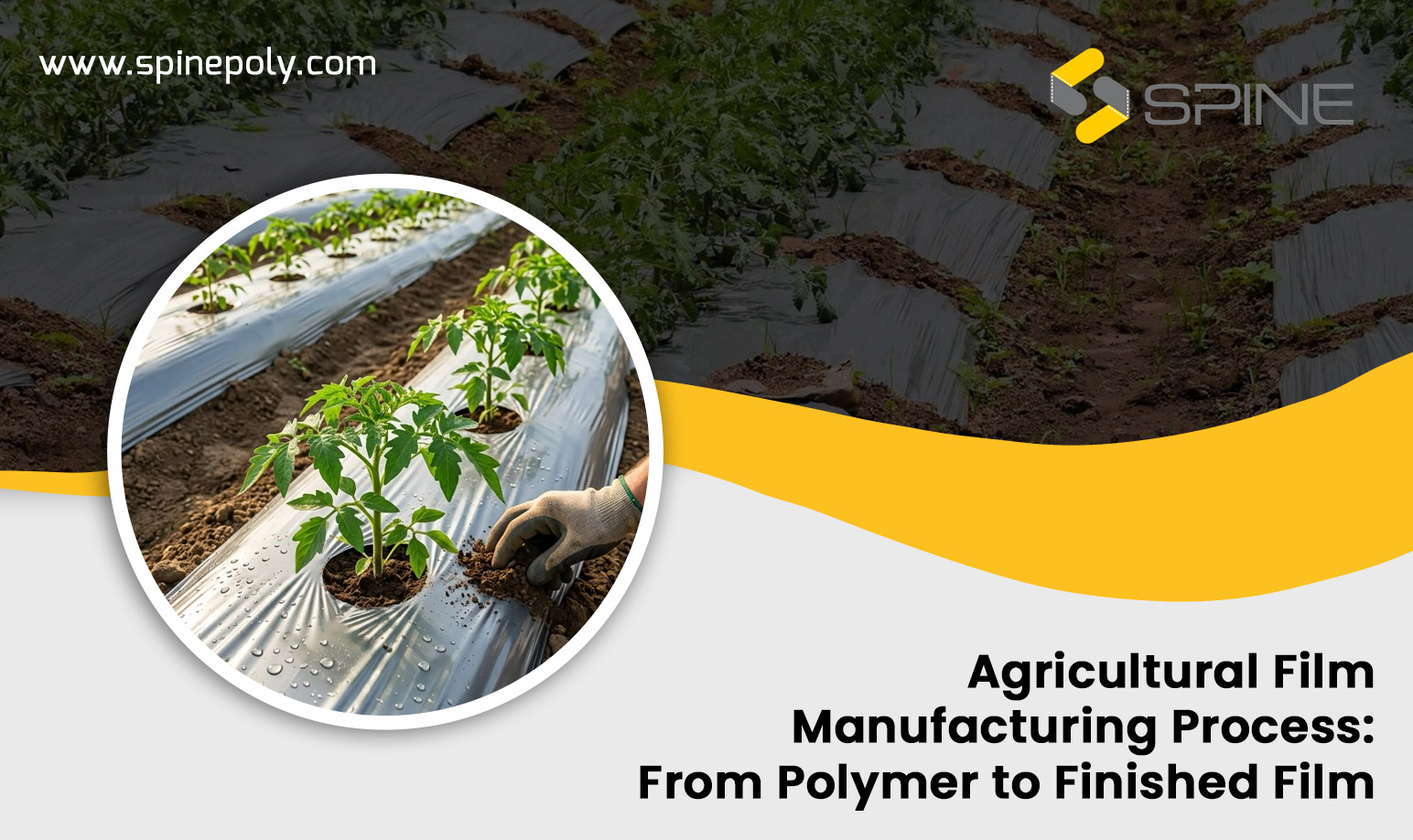
Agricultural films, mulch films, greenhouse covers, silage wraps, and crop protection sheets look simple once they’re rolled out over a field. But getting from raw polymer to a functional roll of farm ready film involves a precise, closely controlled manufacturing process. At Spine Poly Tech, understanding this process isn’t just technical knowledge; it’s what allows us to engineer films that actually perform under real agricultural conditions: sun exposure, soil contact, temperature swings, and mechanical stress from wind and handling.
Here’s a look at how agricultural film is actually made, from raw resin to finished roll.
Step 1: Selecting the Right Polymer
Everything starts with resin selection. Most agricultural films are made primarily from polyethylene, typically linear low density polyethylene (LLDPE), sometimes blended with low density polyethylene (LDPE) or high density polyethylene (HDPE) depending on the application. LLDPE is favored because of its strength, flexibility, and puncture resistance, which matter enormously for films that get stretched over soil beds or exposed to wind and equipment contact.
Additives are blended in at this stage too, depending on the film’s intended function:
- UV stabilizers to slow degradation from prolonged sun exposure
- Anti fog or light diffusion agents for greenhouse films
- Black or colored pigments for mulch films used for weed suppression and soil temperature control
- Biodegradable additives, in films designed to break down after a growing season
The polymer blend is what ultimately determines how the film performs in the field; its durability, light transmission, and how it handles temperature extremes.
Step 2: Extrusion; Turning Resin Into Film
The polymer, typically supplied as small plastic pellets, is fed into an extruder, where it’s heated and mechanically worked until it melts into a uniform, flowable mass. Most agricultural film is produced using a process called blown film extrusion.
In blown film extrusion, the molten polymer is forced through a ring shaped (annular) die, forming a continuous tube of molten plastic. Air is then blown up through the center of this tube, inflating it into a bubble several times the diameter of the die. This inflation step is critical; it stretches and thins the film to its target thickness while also aligning the polymer’s molecular structure, which improves strength in multiple directions.
For films that need specific performance properties like enhanced barrier protection, added strength, or UV control layered separately from the base film manufacturers often use co extrusion, where multiple polymer layers with different properties are extruded simultaneously through the same die, fusing into a single multi layer film. Advanced agricultural extrusion lines today can produce films with up to seven distinct layers, allowing manufacturers to balance strength, material efficiency, and functional performance within one film structure.
Step 3: Cooling and Bubble Formation
As the inflated bubble rises above the die, it passes through a cooling zone, usually using an external air ring and, for high performance lines, additional internal cooling. This cooling solidifies the polymer, locking in the film’s thickness and structural properties. The point where the molten film fully solidifies is known as the frost line, and its height is carefully controlled, since it directly affects film clarity, strength, and thickness consistency.
Step 4: Collapsing and Flattening the Film
Once cooled, the bubble is drawn upward by a pair of nip rollers positioned several meters above the die. These rollers gradually collapse the tubular bubble into a flat, double layered film web. The speed of this draw off process, relative to the extrusion rate, determines the final film gauge (thickness) a critical specification for agricultural films, where thickness directly affects durability, UV resistance duration, and cost per acre covered.
Step 5: Slitting and Winding
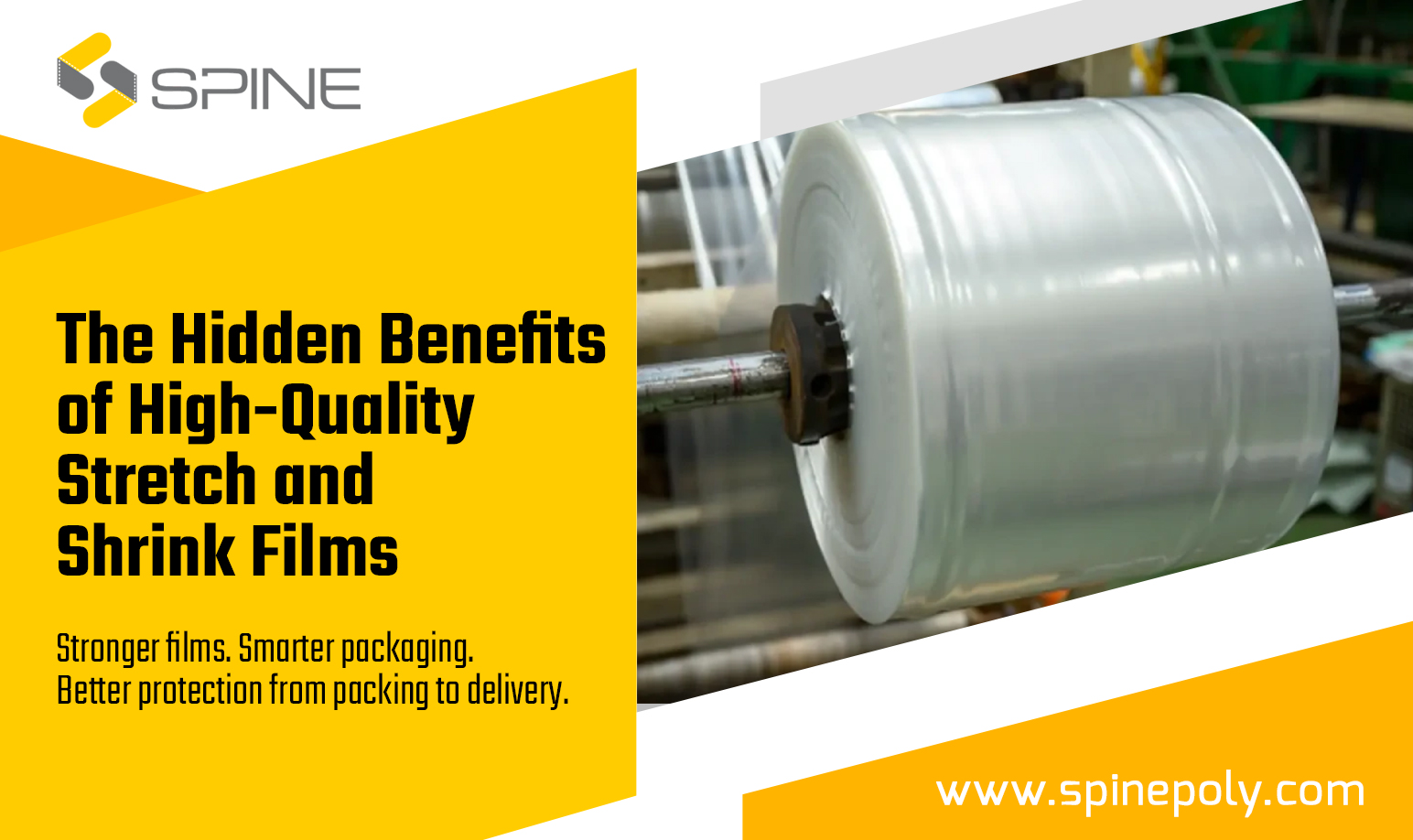
Depending on the intended use, the flattened film tube may be slit along one or both edges to produce single or double sheets, rather than a continuous tube. This is common for mulch films, which are typically used as flat sheets rather than tubing.
The finished film is then wound onto large rolls using precision winding equipment that maintains consistent tension across the roll’s width. Uneven winding tension can cause wrinkling, stretching, or inconsistent unrolling in the field; a seemingly minor manufacturing detail that has real consequences for farmers laying film over long rows.
Step 6: Quality Control Testing
Before agricultural film leaves the facility, it typically undergoes testing for:
- Tensile strength and elongation — to confirm the film can withstand stretching during field application without tearing
- Thickness consistency — measured across the width and length of the roll
- UV resistance duration — particularly important for films expected to last a full growing season
- Puncture resistance — simulating exposure to soil debris, equipment, and handling stress
Films that don’t meet specification are flagged before they reach packaging, since failures in the field; torn mulch film or a collapsed greenhouse cover mid season are far more costly to a farmer than a delayed shipment.
Step 7: Packaging and Distribution
Finished rolls are cut to standard or custom widths and lengths based on customer requirements, then packaged for shipment. For agricultural customers, roll width and length matter as much as the film itself mismatched roll dimensions can mean wasted material or incompatibility with field application equipment.
Why the Process Matters to Farmers and Distributors
Every stage of this process polymer selection, extrusion control, cooling precision, and winding tension directly affects how the film performs once it’s stretched across a field. A film manufactured with inconsistent thickness or poor UV stabilization might look identical to a properly engineered one on the roll, but it will fail early, degrade unevenly, or tear during application.
At Spine Poly Tech, our agricultural film production is built around this understanding: the manufacturing process isn’t just about producing plastic sheeting; it’s about engineering a product that has to survive weather, soil, and mechanical stress for an entire growing season.
Looking for agricultural film engineered for your specific crop, climate, or application method? Get in touch with Spine Poly Tech to discuss film specifications suited to your operation.
Recent Posts