26 Oct 2026
21 Nov 2026
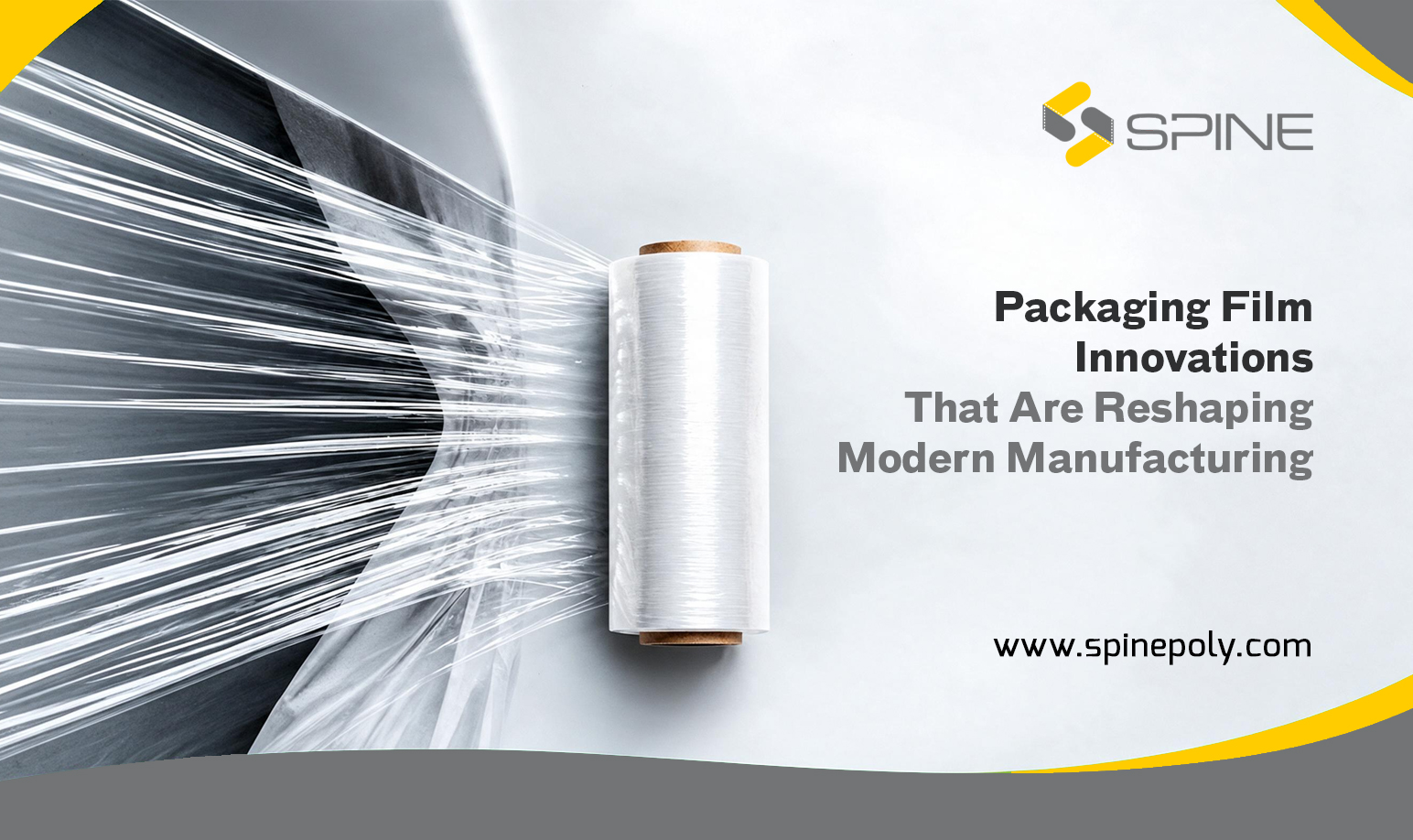
Packaging Film Innovations That Are Reshaping Modern Manufacturing
In modern manufacturing, packaging is no longer an afterthought. It has become a strategic part of product protection, operational efficiency, brand presentation, and sustainability. Across industries from food and pharmaceuticals to logistics, healthcare, textiles, and consumer goods the right packaging film can make a measurable difference in how safely and efficiently products move from the production line to the end user.
Packaging films may appear simple at first glance, but the technology behind them is evolving rapidly. Today’s manufacturers need films that are lighter yet stronger, easier to process, more protective, adaptable to different applications, and aligned with environmental goals. These expectations are driving a new era of innovation in polyethylene and flexible packaging films.
At Spine Poly Tech, we understand that high-performing packaging begins with dependable material engineering. Here are some of the most important packaging film innovations reshaping modern manufacturing.
1. Multi-Layer Films for Better Protection
One of the biggest advancements in packaging has been the growth of multi-layer film structures. Instead of relying on a single layer of material, multi-layer films combine different polymer properties to create a more functional solution.
For example, one layer may provide strength, another may improve sealing, and another may offer resistance against moisture, dust, oxygen, or external contamination. The result is a film that performs better without necessarily increasing overall thickness.
For manufacturers, this means improved product protection during storage and transport. It also helps reduce the risk of leakage, tearing, punctures, and contamination. In sectors such as food, pharmaceuticals, and medical disposables, where protection and hygiene are essential, multi-layer films can play a major role in maintaining product quality.
2. Lightweight Films with High Strength
Reducing packaging weight has become a priority for manufacturers looking to manage material consumption and transportation costs. However, lightweight packaging should never mean weak packaging.
Modern film technology is making it possible to create thinner films with excellent tensile strength, puncture resistance, and durability. These films use carefully selected raw materials and precise extrusion processes to deliver performance with less material.
This innovation benefits businesses in several ways. Less material usage can lower packaging costs, lighter packs can improve logistics efficiency, and high-strength films can reduce damage during handling. Whether the film is being used for industrial wrapping, protective covers, courier applications, or retail packaging, the aim is the same: achieve reliable protection without unnecessary bulk.
3. Improved Barrier Performance
Many products are sensitive to their environment. Moisture, air, dust, odour, and contaminants can affect product quality, shelf life, appearance, and usability. This is why barrier performance has become one of the most valuable features in modern packaging films.
High-barrier films are designed to create a protective shield between the product and the outside environment. They help preserve freshness, support hygiene, and reduce the chances of product degradation. In food packaging, this can help maintain product quality. In medical and healthcare applications, it can support safer handling and storage. In industrial packaging, it can protect materials from moisture, dirt, and damage.
The key is to select a film structure that matches the exact needs of the product. Not every application requires the same level of barrier protection. A well-designed packaging solution balances protection, cost, machinability, and material efficiency.
4. Customised Films for Application-Specific Needs
Modern manufacturers are moving away from one-size-fits-all packaging. Every product has unique requirements, and packaging films must be designed accordingly.
Customisation can include film thickness, width, colour, transparency, surface finish, sealing properties, strength, flexibility, and print compatibility. A packaging film for a lightweight retail product will not have the same requirements as a film used for industrial liners or medical disposable rolls.
This shift towards tailored film solutions helps manufacturers optimize their packaging operations. The right film can run smoothly on packaging machines, reduce wastage, improve sealing consistency, and create a better final presentation. It also prevents over-engineering, where a business pays for more material or performance than the application actually requires.
At Spine Poly Tech, the focus is on understanding the end-use requirement before recommending or developing a film solution. This application-led approach helps ensure that the material supports both product performance and production efficiency.
5. Recyclable and Mono-Material Packaging Structures
Sustainability is now a central consideration in packaging development. Manufacturers are increasingly looking for practical ways to reduce packaging waste while maintaining product safety and functionality.
One important innovation is the use of mono-material packaging structures. These structures use compatible materials, making the packaging easier to sort and recycle compared with complex combinations of unrelated materials. Mono-material film design is becoming especially important for businesses working toward circular packaging goals.
The transition to more sustainable packaging is not always simple. A film must still protect the product, seal effectively, perform on machinery, and meet the demands of distribution. The most successful solutions are those that consider the entire life cycle of the packaging from material selection and manufacturing through to use and end-of-life handling.
For manufacturers, sustainability should be viewed as an opportunity to innovate rather than a compromise. Lighter films, efficient processing, responsible material choices, and recyclable design can work together to create meaningful progress.
6. Consistency Through Advanced Extrusion Technology
Film quality depends heavily on manufacturing precision. Even small variations in thickness, strength, or surface quality can cause problems during conversion, printing, sealing, or packing.
Advanced extrusion technology enables better control over film properties. It supports more uniform thickness, improved clarity, stronger mechanical performance, and dependable output across production batches. This consistency is particularly important for high-volume manufacturing environments, where packaging disruptions can lead to delays, waste, and additional costs.
Reliable quality control also helps manufacturers maintain confidence in their packaging supply. When films perform consistently, businesses can reduce machine downtime, minimise rejected packs, and maintain better efficiency across their operations.
7. Films Designed for Modern Logistics
The journey of a product does not end at the factory. It may move through warehouses, distribution centres, transport vehicles, retail environments, and last-mile delivery networks. Packaging films must be prepared for every stage of that journey.
Innovative films are increasingly designed with logistics in mind. Stronger stretch characteristics, tear resistance, puncture protection, and reliable sealing help safeguard products during handling and transportation. This is especially valuable in the fast-growing e-commerce, courier, and industrial supply sectors.
A packaging film that performs well in real-world conditions can help reduce product damage, returns, and customer dissatisfaction. In this way, packaging becomes more than a protective layer; it becomes an important contributor to supply-chain reliability.
The Future of Packaging Films
The future of packaging lies in smarter material choices, stronger performance, lower wastage, and responsible design. As manufacturing continues to evolve, packaging films will need to meet higher standards for quality, customisation, efficiency, and sustainability.
Businesses that invest in the right film solutions can gain advantages in product protection, operational performance, customer experience, and environmental responsibility. The goal is not simply to use more packaging, but to use better packaging.
Spine Poly Tech manufactures polyethylene films, medical-grade rolls, and packaging materials for applications across healthcare, packaging, printing, and industrial sectors. With advanced extrusion technology and a focus on customised film performance, the company supports manufacturers seeking dependable and future-ready packaging solutions.
Recent Posts