12 Oct 2026
29 May 2026
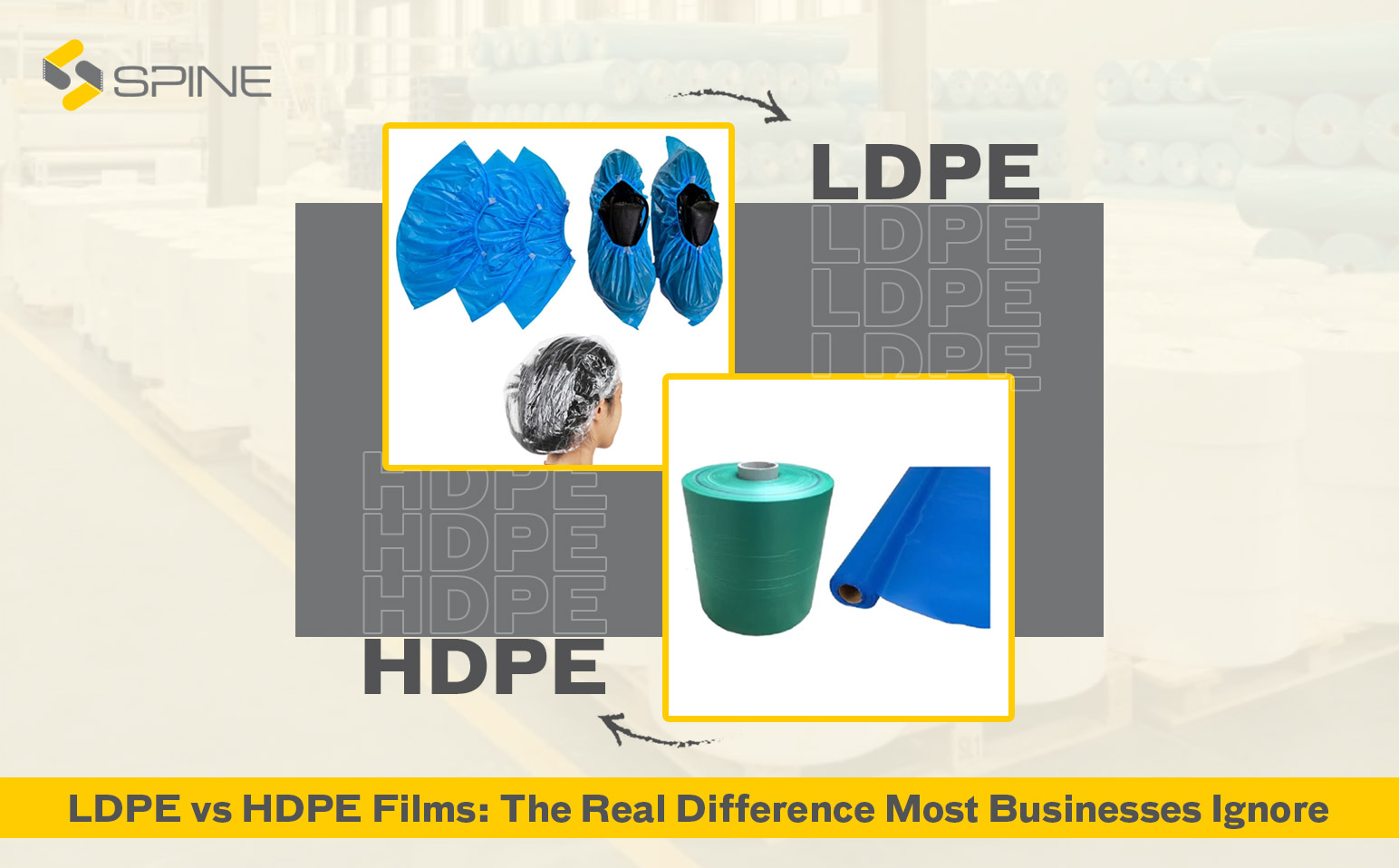
LDPE vs HDPE Films: The Real Difference Most Businesses Ignore
When it comes to selecting the right plastic film for packaging, manufacturing, or industrial use, many businesses assume all polyethylene films perform similarly. In reality, choosing between LDPE (Low Density Polyethylene) and HDPE (High Density Polyethylene) can significantly impact product performance, cost efficiency, and long term reliability.
At Spine Poly Tech, we work closely with clients across industries to help them make informed decisions about film selection. This guide breaks down the real differences between LDPE and HDPE films beyond the basics most suppliers talk about.
Understanding the Core Difference
The primary distinction between LDPE and HDPE lies in their molecular structure.
- LDPE has a more branched structure, resulting in a softer and more flexible film.
- HDPE has a linear structure with higher density, making it stronger and more rigid.
This structural variation directly affects how each film performs in real world applications.
Flexibility vs Strength: Choosing What Matters More
One of the most overlooked factors is how the film behaves under stress.
LDPE Films:
- Highly flexible and stretchable
- Excellent for applications requiring softness and adaptability
- Ideal for wrapping irregular shapes
HDPE Films:
- Higher tensile strength
- More resistant to punctures and tearing
- Better suited for heavy duty applications
At Spine Poly Tech, we often find that businesses choose based on price alone while performance requirements should always come first.
Transparency and Appearance
Visual clarity can be critical in packaging, especially in retail or medical applications.
- LDPE films offer better transparency and gloss, making them ideal for product display packaging.
- HDPE films are typically more opaque with a matte finish.
If product visibility is a priority, LDPE is usually the better option.
Moisture Resistance and Barrier Properties
Both LDPE and HDPE provide good moisture resistance, but they perform differently depending on the environment.
- HDPE films offer superior moisture barrier properties, making them suitable for protective packaging and storage.
- LDPE films provide balanced protection with added flexibility.
Spine Poly Tech engineers films based on application specific barrier requirements to ensure optimal performance.
Heat Resistance and Temperature Performance
Temperature tolerance is another key differentiator:
- HDPE films can withstand higher temperatures and maintain structural integrity.
- LDPE films have a lower melting point but offer better heat sealing properties.
This is why LDPE is commonly used in heat sealable packaging, while HDPE is preferred for more demanding environments.
Processing and Manufacturing Efficiency
From a production standpoint, both materials offer unique advantages:
LDPE:
- Easier to process
- Excellent for blown film extrusion
- Smooth sealing and converting
HDPE:
- Requires more controlled processing
- Produces thinner, stronger films
- More efficient for bulk and industrial packaging
Spine Poly Tech uses advanced extrusion technologies to optimize both LDPE and HDPE films for consistent quality and performance.
Cost vs Value: The Hidden Trade Off
Many businesses assume HDPE is always the more cost effective option due to its strength. However, the reality is more nuanced.
- LDPE may reduce damage rates due to its flexibility
- HDPE may reduce material usage due to its strength
The right choice depends on the total cost of ownership, not just raw material price.
At Spine Poly Tech, we help clients evaluate both short term costs and long term value before finalizing material selection.
Common Applications: Where Each Film Excels
LDPE Film Applications:
- Flexible packaging
- Shrink films
- Agricultural films
- Medical disposables
- Protective covers
HDPE Film Applications:
- Industrial liners
- Grocery and carry bags
- Chemical packaging
- Heavy duty sacks
- Construction films
Understanding these use cases helps businesses align material properties with actual needs.
Sustainability Considerations
Sustainability is becoming a major factor in material selection.
- Both LDPE and HDPE are recyclable under proper conditions
- HDPE is often preferred for its recyclability infrastructure
- LDPE supports lightweight packaging, reducing overall material usage
Spine Poly Tech is committed to developing environmentally responsible film solutions that align with evolving global standards.
The Real Difference Businesses Often Miss
The biggest mistake companies make is treating LDPE and HDPE as interchangeable. They are not.
The real difference lies in application fit:
- Choose LDPE when flexibility, clarity, and sealability matter
- Choose HDPE when strength, rigidity, and durability are critical
Making the wrong choice can lead to:
- Product damage
- Increased costs
- Inefficient packaging processes
Spine Poly Tech’s Approach
At Spine Poly Tech, we don’t just supply films, we provide custom engineered solutions.
Our expertise includes:
- Tailored LDPE and HDPE film development
- Multi layer and co extruded film solutions
- Industry specific customization
- Consistent quality control and performance testing
We work closely with businesses to ensure they get the right film for the right application, every time.
Final Thoughts
Choosing between LDPE and HDPE films is more than a technical decision; it’s a strategic one.
By understanding the real differences and aligning them with your operational needs, businesses can improve efficiency, reduce waste, and enhance product protection.Spine Poly Tech is here to guide you through that process with reliable, high performance polyethylene film solutions built for modern industry demands.
Recent Posts